Airplane Advertising in China: A Complete Guide to the Market & Media Formats
2026-06-11Tianci MediaViews:2
Highlights
China‘s aviation market is the world’s second-largest, offering advertisers a unique channel to reach premium audiences. This guide covers everything you need to know about airplane advertising in China — from available formats to costs and regulations.
Why Advertise on Chinese Airlines?
Chinese air travelers are a high-value audience. According to industry data, 30–40 year olds account for 52% of passengers, while corporate managers and middle managers make up 48.8%. This demographic holds strong purchasing power for luxury goods, automotive, financial services, and premium travel.
The captive cabin environment also boosts recall rates. Passengers on Chinese carriers typically spend over two hours in-flight with minimal distractions — delivering ad exposure far beyond typical outdoor media.
Key Airlines & Their Ad Offerings
| Airline | Available Ad Formats | Unique Advantage |
|---|---|---|
| China Southern | Fuselage wraps, headrest covers, tray tables, printed/digital boarding passes, in-flight TV | Coverage of 1,000+ routes; 160M annual passengers |
| China Eastern | Headrest covers (300,000 RMB per aircraft per year), tray tables (250,000 RMB per aircraft per year), in-flight TV and WiFi advertisements | Premium business travelers; 100M+ high-net-worth passengers annually |
| Hainan Airlines | Fuselage wraps, cabin media, in-flight video, lounge ads, boarding passes | Integrated ground-to-air brand storytelling |
| Shandong Airlines | Cabin TV, seat headrests, tray tables, luggage bin ads, boarding passes | 30M premium passenger reach |
| Spring Airlines | Cabin “three-piece set” (headrest, tray table, luggage bin) | Cost-effective combination package (100,000 – 200,000 yuan/month) |
Main Advertising Formats & Pricing
1. Fuselage Wraps & Aircraft Naming
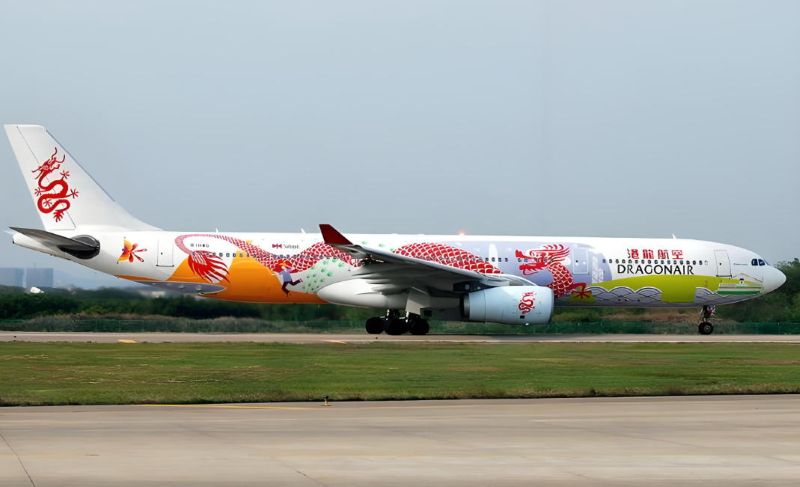
The most visible format, turning an entire aircraft into a flying billboard.
Price: 4 million – 8 million RMB per aircraft per year for naming rights; full fuselage painting can reach 15 million–20 million RMB annually.
Minimum term: One year.
Best for: Tourism boards (e.g., “Wudangshan” livery on Donghai Airlines), national brands, and large enterprises.
2. Headrest Covers & Tray Tables
Placed directly in front of each passenger. Tray tables offer interactive potential via QR codes to drive bookings or sign-ups.
Pricing: Single-aisle aircraft: ~150,000 RMB/year; wide-body: ~250,000 RMB/year for tray tables. Headrest covers: ~180,000 RMB/year per aircraft. Monthly packages start from 15,000 RMB.
Unique strengths: 头枕巾 offers under-50cm viewing distance with over 40 minutes of daily gaze time; 小桌板 achieves 92% deployment rate during meal service, creating forced reading conditions.
3. Boarding Pass Ads
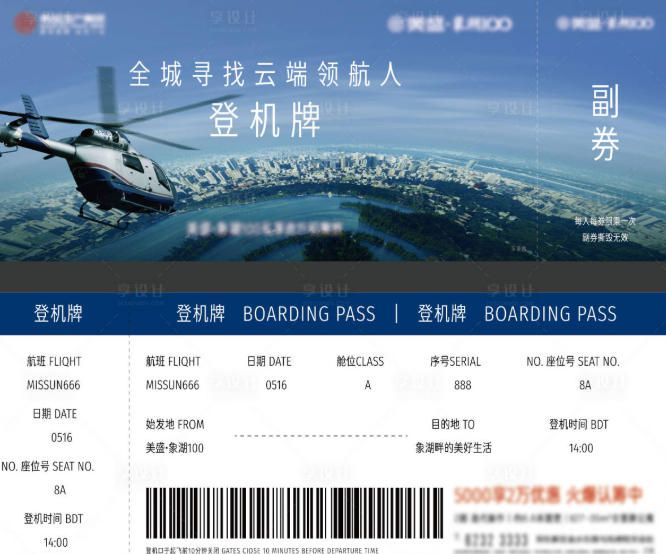
Printed or digital passes reach 100% of passengers, often viewed multiple times.
Pricing: Approximately 1.5 RMB per pass, with minimum orders starting at 300,000 passes (~450,000 RMB per campaign). Some airports accept 100,000-pass minimums.
Advantage: Passengers keep passes for reimbursement or memories, extending ad exposure.
4. In-Flight Magazine Ads
Magazines in every seatback pocket offer high-quality, long-dwell reading.
Pricing: Interior full-page ad in China Southern‘s inflight magazine: 289,000 RMB per issue; cross-page spreads: 521,000 RMB.
Audience: Over 10 million readers per issue across all aircraft.
5. Cabin “Three-Piece Set”
A bundled package including headrest cover, tray table sticker, and luggage bin wrap for complete cabin immersion.
Pricing: 100,000 – 200,000 RMB per month from airlines like Spring Airlines.
Key advantage: Overhead-to-seat coverage means near 100% forced exposure, with average recall rates as high as 70%.
Regulatory & Compliance Notes
Content review: Airlines vet all creative to ensure alignment with Chinese advertising laws — false claims, improper imagery, or misleading healthcare messages face rejection.
Fire safety standards: cabin materials (headrest covers, tray table stickers) must meet CAAC fire resistance requirements; standard vinyl fails these tests.
Intellectual property: Brands cannot use military aircraft imagery or third-party intellectual property without explicit authorization.
Industry self-regulation: China Air Transport Association’s Passenger Transport Self-Discipline Convention prohibits false promotions and below-cost dumping, strengthening overall ad environment standards.
Practical Tips for Success
Match format to goal: Use fuselage wraps for national brand awareness. Deploy tray tables + QR codes to drive ticket sales or local bookings.
Target intelligently: Select routes aligning with your customer profile — business-heavy routes (Beijing–Shanghai–Guangzhou–Shenzhen) differ greatly from leisure-heavy flights.
Require verification: Always request material certifications, fire safety compliance docs, and precise block hours before executing final contracts. Insist on pre-production proofs on the exact aircraft model to avoid expensive reprints.
Consider combined packages: Aircraft naming bundled with cabin media (headrest cover + tray table + luggage bin wraps) often yields better value than standalone buys.
Conclusion
China‘s airplane advertising market delivers premium audiences, high recall rates, and diverse creative options — from massive fuselage wraps to personal tray table placements. Successful execution requires clear objective setting, format matching, navigation of airline-specific procedures, and strict regulatory adherence. The reward is direct access to one of the world’s most valuable consumer segments, all within a distraction-free skyborne environment.
Ready to launch your Chinese airline campaign?