Creative Airplane Advertising: How to Engineer High-Altitude Brand Impact
2026-06-03Tianci MediaViews:97
Highlights
Most marketers think airplane advertising is simple: slap a logo on a plane or run a pre-roll video on seatback screens. But the brands that see real lift — in recall, sentiment, and sales — use something deeper: applied psychology, contextual creativity, and route‑level data science. This guide moves beyond the basics. You’ll discover three under‑used airplane ad formats, the psychological triggers that make aerial messages stick, and how to measure more than just impressions.
1. Three Unconventional Airplane Advertising Formats (That Actually Work)
While fuselage wraps and tray table stickers are standard, innovative advertisers are quietly using the following high‑impact formats.
1.1 Dynamic Banner Towing with Real‑Time Triggers
Towed banners are not just for beach crowds. Smart operators now coordinate flights with live events: a music festival, a sports final, or even a weather break. For example, a sunscreen brand can circle a crowded boardwalk on the first sunny Saturday of summer. A real‑estate developer can fly a “Grand Opening Today – Exit 17” banner over highway rush hour.
Pro tactic: Use flight‑tracking APIs to trigger digital retargeting ads. When the banner plane enters a specific geofence (e.g., a stadium), your mobile display ads activate for everyone in that area. The aerial banner drives top‑of‑mind awareness; the phone ad captures the click.
1.2 “Immersive Cabin Takeover” (Not Just a Sticker Here and There)
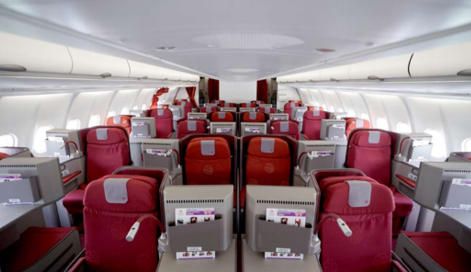
Instead of placing isolated ads on headrests or tray tables, a cabin takeover syncs every touchpoint. Overhead bins, seatback screens, safety card inserts, even the cabin crew’s aprons carry a single narrative. One low‑cost European carrier allowed a sparkling water brand to turn the entire economy cabin into a “hydration zone” — green lighting, branded bottle on every tray, and a post‑flight discount QR code.
Psychological effect: environmental congruence. When every visual cue reinforces the same message, passengers stop perceiving it as advertising and start experiencing it as atmosphere. Recall rates for cabin takeovers often exceed 70% after a single flight.
1.3 External “Teaser Campaigns” on Regional Aircraft
Most external wraps are full‑color, full‑message. But a tease creates curiosity. A streaming service wrapped only the tail of five regional jets with a question: “Who killed the captain?” (a fictional series). No logo, no URL — just an enigmatic phrase. Passengers and aviation spotters posted photos on social media, generating organic buzz. After one week, the full wrap appeared with the release date.
This works because the Zeigarnik effect — our brain’s tendency to remember incomplete or mysterious information. An unresolved question on a plane wing is far more memorable than a solved statement.
2. Psychological Triggers That Make Airplane Ads Unforgettable
Airplanes are not billboards. They are a unique psychological space: captive, slightly anxious, and anticipatory. Use these three triggers.
2.1 The “Authority Halo” of Altitude
Humans subconsciously associate height with authority and trust. An ad seen on an aircraft — especially the exterior — benefits from a credibility transfer. The same logo on a roadside banner feels commercial. On a 737’s fuselage, it feels endorsed by aviation itself. Luxury brands (watches, private jets, financial services) over‑index on external wraps precisely for this reason.
How to use it: Never put discount‑heavy messages on an external wrap (“50% off!”). Save that for interior tray tables. Exterior = brand stature. Interior = direct response.
2.2 The “Safe Haven” Effect (For In‑Flight Ads)
Cruising at 35,000 feet, passengers experience a mix of boredom and low‑level anxiety. Their brain craves familiar, reassuring cues. Ads that promise safety, comfort, or a known pleasure perform best. One airline’s internal study found that a hotel chain’s tray‑table ad (“Your quiet room awaits”) had 3x the recall of a car rental ad (“Rent and save”).
Creative rule: In‑flight messages should reduce friction, not add it. Avoid aggressive calls to action. Instead, use soft transitions: “Plan your next escape. Wi‑Fi available.”
2.3 The “Scarcity Window” of Landing Approach
The 20 minutes before landing are a unique micro‑window. Passengers are mentally transitioning to destination mode — thinking about taxis, meals, meetings. Ads that offer a local, time‑limited benefit see conversion spikes.
Example: A restaurant chain placed a simple message on the seatback screen when flights entered Las Vegas airspace: “Show this ad at any Strip location within 2 hours of landing → free appetizer.” Redemption rates hit 11% — astronomical for any display ad.
3. Data‑Driven Targeting: It’s Not Just the Airline, It’s the Route
Many buyers choose an airline (e.g., Delta) and hope for the best. High‑ROI advertisers buy by route, time of day, and even aircraft type.
Route Persona Mapping
Monday 6 AM flight from Newark to Chicago → business travelers, expense account users. Ad B2B software, premium luggage, or airport lounge memberships.
Friday 4 PM flight from Orlando to Cincinnati → families returning from theme parks. Ad kids’ entertainment, home cleaning services, or frozen meal delivery.
Red‑eye from LA to New York → frequent flyers, creatives, shift workers. Ad sleep aids, noise‑canceling headphones, or coffee delivery.
Aircraft Type Matters
Narrow‑body (A320, 737): Short hops, high turnover. Best for quick‑response ads (meal deals, local attractions).
Wide‑body (787, A350): Long‑haul, premium cabins. Ideal for high‑consideration products (luxury goods, financial planning, tourism boards).
Airlines can provide anonymized route data. Insist on seeing average passenger dwell time, Wi‑Fi usage rates, and business/leisure split before you buy.
4. Case Study: How a D2C Mattress Brand Used Airplane Ads to Beat Local Competitors
Brand: “CloudSleep” (fictional but realistic)
Goal: Drive showroom visits in three Texas cities (Dallas, Houston, Austin)
Budget: $45,000 (production + media)
Format: Partial external wraps on 5 regional jets flying only intra‑Texas routes + landing‑phase digital seatback ads
Creative:
External wrap: “Better sleep starts here. CloudSleep.com/texas” (simple, geo‑specific URL)
Seatback ad (triggered when flight entered final approach into target city): “Landing in [City Name]? Our showroom is 5 minutes from the airport. Show this ad for free pillow.”
Results (8‑week campaign):
22% increase in showroom foot traffic vs same period previous year
3,400 direct QR scans from seatback ads
$4.20 cost per visit (compared to $12+ for paid social)
Key takeaway: The landing‑phase trigger (geo‑aware digital seatback) turned a passive audience into active store visitors within an hour of landing.
5. Legal & Operational Pitfalls (Most Guides Skip)
Creative airplane advertising can crash against regulations if you ignore these.
Readability vs. Aviation Safety
External wraps cannot use reflective vinyl that could distract other pilots. All text must remain outside mandatory emergency markings (e.g., “EXIT” signs cannot be covered). Work only with FAA/EASA‑certified installers — your media agency should provide proof.
Banner Towing No‑Fly Zones
Most cities restrict banner towing over crowded stadiums, national parks, or near airports. Always request a geo‑restriction map from the operator. One energy drink brand learned the hard way when their banner plane was grounded over a college football game — fine plus zero impressions.
Cabin Interior Fire Standards
Any material placed inside the aircraft (tray table stickers, headrest covers) must meet flame‑resistance standards. Cheap vinyl can melt and emit toxic fumes. Airlines will reject your ad at the hangar door if you skip certification.
6. Measuring What Matters: Beyond Impressions
Outdoor advertising is notoriously difficult to measure, but airplane ads offer unique proxies.
| Metric | How to Capture | Good Benchmark |
|---|---|---|
| Ground‑level views (external) | Estimate via airport traffic count + flight frequency × daily overflights | 500k–2M per month for regional jet |
| In‑flight attention (internal) | Use seatback screen dwell time (if digital) or post‑flight survey | 45+ seconds per flight segment |
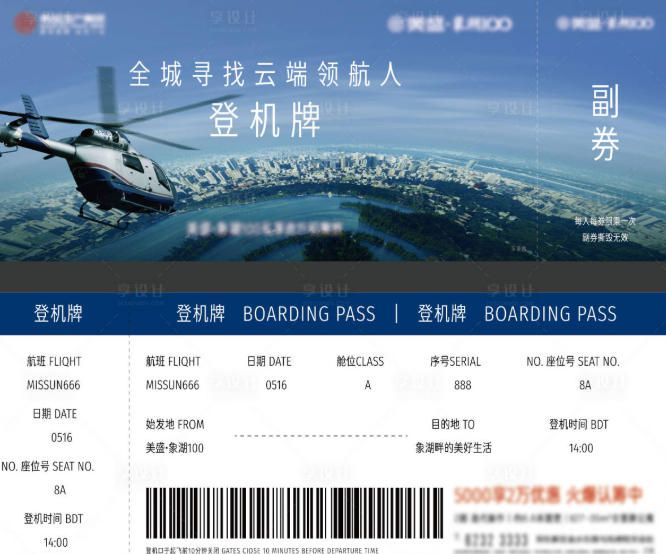
| QR scan rate | Unique QR on tray table / boarding pass | 2–5% (excellent for offline media) |
| Brand lift | Onboard Wi‑Fi exit survey (e.g., “Which brand do you remember seeing on this flight?”) | +15% vs control route |
Advanced tactic: Programmatic guarantee. Some aviation media sellers now offer pay‑per‑view for digital seatback screens — you pay only when the ad is displayed for at least 10 seconds. Negotiate this into your contract.
7. The Future: AI‑Optimized Airplane Advertising
The next frontier is dynamic in‑flight ad swapping via satellite connectivity. Imagine:
A flight from New York to Miami shows winter coat ads at departure, then swaps to swimsuit ads when cabin temperature rises and the plane enters Florida airspace.
An ad for a headache remedy appears only on screens where the seatback sensor detects a passenger rubbing their temples (yes, computer vision is being tested).
For external ads, airlines are experimenting with e‑ink fuselage panels – programmable wraps that change message by city or time of day. A plane landing in Chicago at 8 AM shows a coffee ad. Taking off from Chicago at 6 PM shows a dinner delivery ad.
These are not science fiction. The first commercial e‑ink aircraft test is scheduled for late 2026.
Final Takeaway: Fly Smart, Not Just High
Airplane advertising is not a one‑size‑fits‑all medium. The brands that win treat it as a psychological and logistical discipline:
Match external stature to internal response.
Use route data like a media buyer, not a travel agent.
Trigger landing‑phase local offers to capture intent.
Test a cabin takeover before a full external wrap.
The sky is still one of the few ad spaces without ad blockers, scroll fatigue, or fake clicks. But only if you design for the human mind at 35,000 feet.
Ready to launch a campaign that passengers actually remember? Start with a single route, a single psychological trigger, and a creative that respects the environment. Then measure, optimize, and scale.