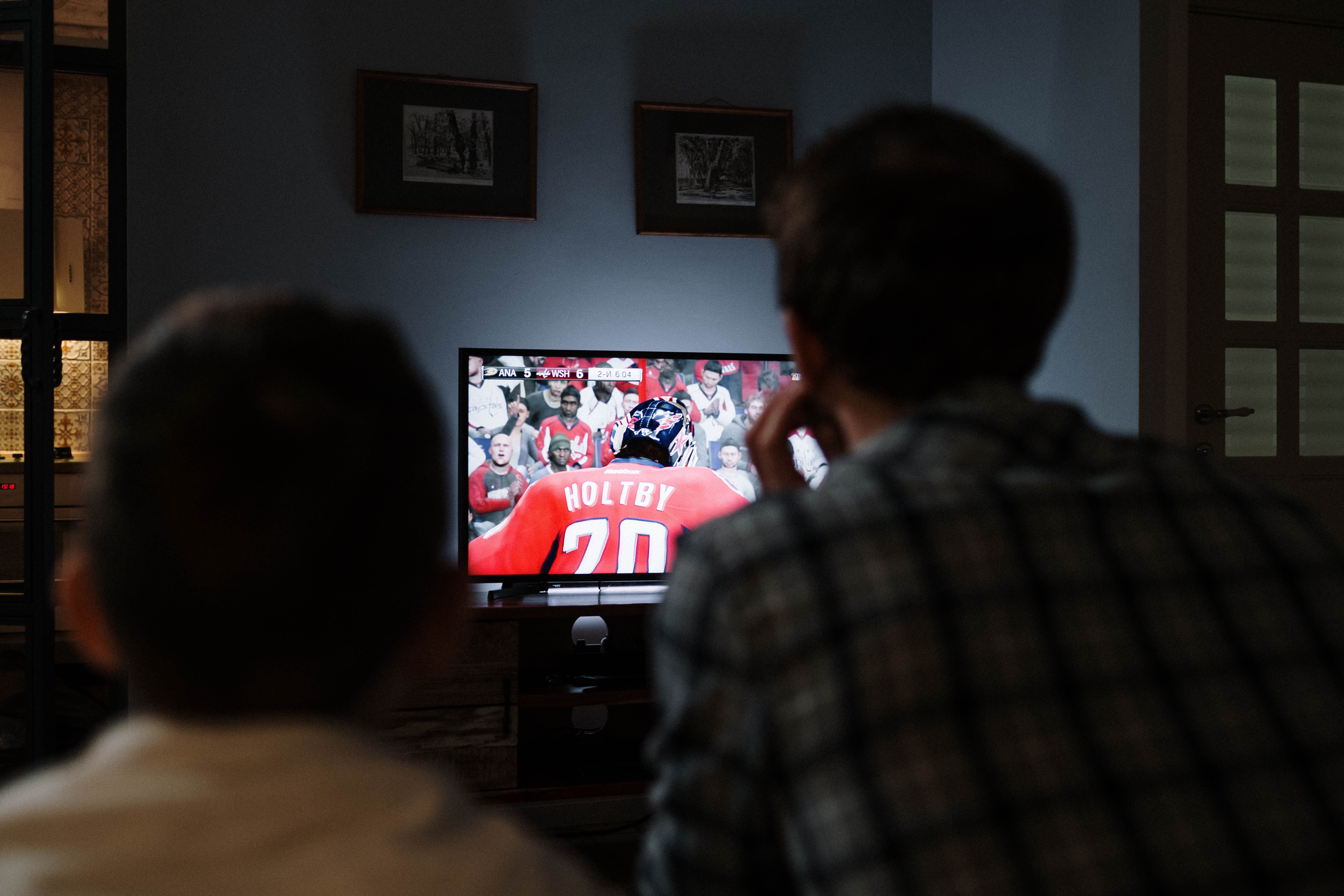
Do you still think no one is watching TV? How to invest in TV advertising to get the money on the right edge?
2026-03-11Tianci MediaViews:123
Highlights
Want to advertise on TV but don't know where to start? This article provides a detailed explanation of the differences in advertising between CCTV, IPTV, and OTT, and offers a comprehensive guide for the entire process from target positioning to effect tracking. Tianci Media is a professional television advertising placement company that helps you accurately reach home screens.
Have you noticed a very strange phenomenon——
On one hand, the argument that "no one is watching TV anymore" has repeatedly flooded the social media, while on the other hand, the most savvy advertisers such as Coca Cola, BMW, and Procter&Gamble are still spending a lot of money during prime time on CCTV and major TV stations.
Who is wrong? It's all right.
The person who says' no one is watching TV 'is looking at the startup rate. Twenty years ago, the operating rate of Chinese home televisions was 70%; Today, this number has indeed dropped below 30%.
And those who continue to invest in television advertisements are counting on another account: credibility, breadth of coverage, and exclusivity of family scenes - these abilities have become increasingly scarce and expensive core assets of television media in the fragmented digital age.
For novice marketers, the question of "how to advertise on TV" may be accompanied by a bunch of outdated stereotypes. You think it's expensive, but in fact, it also has terrestrial channels priced at a few thousand yuan per level; You think it's tacky, but in fact, it has been interacting with mobile screens for a long time; You think it can't be measured, but in fact, its current level of accuracy has exceeded most people's understanding.
This guide will systematically break down the entire process of TV advertising placement in 2026, from cognitive refresh to practical operation, in one article to understand.
1、 Re understanding TV commercials - it's not the thing you remember anymore
Before discussing 'how to invest', a cognitive refresh must be completed first.
Today's TV advertisement is a combination of three websites.
The first network: traditional cable television. Including CCTV, satellite TV, and terrestrial channels. Its core feature is linear live streaming - where the program is broadcasted, the advertisement follows. The target audience covered by this website is mainly middle-aged, elderly, and family users, with a high level of trust, which is the cornerstone of building brand credibility.
The second network: IPTV. The television services provided by telecommunications operators have surpassed the user base of traditional cable services. Its core feature is bidirectional interaction - it can be played on demand, replayed, and paused. This means that advertisements can also be targeted. The IPTV startup advertisement you invested in Pudong New Area of Shanghai and the one invested in Puxi can be two completely different brands.
The third network: OTT. That is to say, smart TV. Xiaomi, Hisense, Skyworth, Sony, along with various TV boxes. The core feature of this website is the Internet - with user ID and behavioral data, it can make programmed purchase, even pay for exposure. It covers the youngest audience and has the strongest interaction ability, making it the golden channel for brands to reach the new middle class.
These three networks, sharing the same screen, are three completely different media species.
That's why 'Is TV advertising still useful?' is a pseudo question. The correct question is: For my brand, target audience, and budget, which website should I choose, how should I combine them, and how much should I invest?
2、 The Four Irreplaceable Values of Television Advertising
In the era of information dust in 2026, television advertising still cannot be replaced, relying on these four trump cards.
The first trump card: credibility premium. Internet advertising can be faked, screen swiping can be bought, and the comment area can be controlled. But 30 seconds before and after the CCTV News of CCTV, the patches of the Golden Theater of Oriental Satellite TV, and the title of the flagship variety show of Hunan Satellite TV - these things, money can buy position, but not trust.
The essence of television advertising is that it is a wholesaler of social consensus. It tells consumers that this brand is officially recognized, accepted by the mainstream, and worthy of trust. This kind of psychological account recharge cannot be provided by any information flow advertisement.
The second trump card: exclusivity in family settings. Mobile phones are personal belongings, while televisions are household public goods.
A man was brushing Tiktok on the sofa, and the husband, children and parents sitting beside him were all looking at their small screens. But when he picks up the remote control and turns on the TV, the whole family's gaze will converge in the same direction.
Maternal and child products, automobiles, home decoration, tourism, and large household appliances - these categories require joint decision-making by families, and television advertising is the only medium that can wash the entire family's minds synchronously before the decision is made.
The third trump card: Phenomenon level detonation ability. An information flow advertisement that you can swipe away. An elevator advertisement, you can look down without looking at it.
But a TV advertisement aired before the halftime of the World Cup final, the countdown to the Spring Festival Gala, and the finale of a popular TV series - you are the "pause button" shared by audiences across the country.
In addition to TV, only WeChat and Tiktok's head events can barely reach the ability to create national topics in an instant. But the price of the latter is no longer cheaper than television.
The fourth trump card: the sedimentation effect of brand assets. Search advertising stops, traffic immediately drops to zero. The e-commerce direct delivery service stopped trading, and orders were immediately cut in half.
But with the suspension of television advertising, the brand's accumulated recognition, reputation, and trust over the past few years will not disappear overnight. It is like a slowly depositing iceberg, and melting also takes a long time.
This is brand asset. Television advertising is one of the few media that can truly accumulate assets for a brand, rather than just consuming a budget.
3、 Six step decision-making method for TV advertising placement
If you have decided to include television advertising in your budget, the next step is the core operational steps of "how to place television advertising".
Step 1: Clarify your core goals
Before advertising, it is necessary to think clearly about what you want and avoid blindly following the trend:
Brand exposure: If you want to enhance brand awareness, prioritize choosing prime time or popular programs with wide coverage and high ratings, such as CCTV and top TV stations.
Product conversion: If you want to promote sales, you need to focus on the vertical channels where the target users are concentrated - the children's channel for maternal and child products, and the life service channel for household appliances.
Event promotion: If it is a short-term event such as a promotion or press conference, it is necessary to plan the duration of the event to avoid early or delayed advertising.
Regional goal: If deeply cultivating a province or city, priority should be given to provincial satellite TV, terrestrial channels, and IPTV regional targeting.
Step 2: Calculate your actual budget
Many beginners are discouraged by the stereotype that TV commercials are expensive, but in fact, today's TV commercials are a matter of personal preference.
The CCTV News of CCTV fell one step ahead and started with 300000 yuan each, which was a firework for the giant.
But during non prime time on a provincial-level terrestrial channel, a 15 second interstitial advertisement can be broadcasted for a week for a few thousand yuan.
IPTV startup ads can be targeted by region, and you only want to cover 200000 households in a certain region, which can be achieved with a budget of 100000.
OTT advertising can be bid by audience, and if you only want to promote ads to families who have recently searched for "milk powder", you can try it out for 5000 yuan.
The threshold for television advertising is no longer a natural barrier, but a ladder that progresses layer by layer. You don't need to step to the top, just find the level within your reach.
Step 3: Accurately locate the target audience
The key to TV advertising placement is to "reach the precise audience", and beginners can position themselves from three dimensions:
Basic attributes: age, gender, region (such as skincare products targeting women aged 25-35, regional brands focusing on local audiences).
Consumer habits: purchasing power, consumption scenarios (such as high-end home appliances targeting middle and high-income families, snacks and beverages focusing on young consumer groups).
Media preference: The channels and time slots commonly watched by the target audience (elderly people prefer drama channels, while office workers tend to watch TV dramas in the evening).
Step 4: Choose the appropriate advertising channel and time slot
Channel type:
CCTV: Covering the whole country, with strong credibility, suitable for national brands or enterprises that need to enhance their brand authority.
Provincial level satellite TV: With a concentrated audience in a certain region and high cost-effectiveness, it is suitable for regional leading brands or enterprises expanding into specific markets.
Local channel: Focusing on the local area, precise outreach, suitable for local catering, supermarkets, and service businesses.
IPTV/OTT: precise targeting, suitable for young audiences, regional brands, and effect oriented advertising.
Time period selection:
Prime time (19:00-22:00): The highest ratings, but expensive, suitable for brand exposure.
Non prime time (morning, noon, late night): Affordable prices, suitable for accurately reaching specific groups of people (such as the elderly in the morning).
Step 5: Create high conversion advertising content
Advertising content is the core of advertising effectiveness, and beginners need to pay attention to three points:
Highlight core information: Capture attention in the first 3 seconds and clearly convey the core selling points of the brand or product (such as "XX home appliances, 30-year quality guarantee").
The content is tailored to the audience: the language style and scene settings are in line with the preferences of the target audience (advertisements targeting young people can be more lively, while advertisements targeting middle-aged and elderly people need to be more pragmatic).
Add a clear CTA: guide the audience to take action, such as "click on the official website for consultation", "get XX yuan off at the store", "scan the code to receive coupons".
TV commercials are not brochures, they are trailers. Its task is not to tell users' what we have ', but to generate their interest in' I want to know more '.
Step 6: Tracking and optimizing post advertising effects
TV advertising is not a one-time investment, it needs to be reviewed for effectiveness:
Data monitoring: Determine the effectiveness of advertising through sales data, website visits, and consultation volume.
Audience feedback: Collect user evaluations of advertisements to understand whether the content is recognized.
Plan optimization: Adjust subsequent advertising based on the results - if the conversion is good during a certain period, the budget can be increased, and if the content feedback is poor, it can be modified in a timely manner.
The effectiveness evaluation of TV advertising has entered the 3.0 era: IPTV and OTT advertising can directly track exposure, clicks, and even in store and order placement. Traditional TV+QR code can also partially achieve effect attribution.
4、 The mainstream forms and selection techniques of television advertising
For beginners with zero foundation, understanding the classification of TV advertisements is the first step in precise advertising.
Classified by playback duration
5-second advertisement: The core information is highly condensed, highlighting only the brand name or core selling points, suitable for brand exposure and quick cognitive building. 2026 reference price: 500-5000 yuan/piece/time.
15 second advertisement: Balancing information transmission and memory points, it can fully present core selling points and brand image, making it the most mainstream choice and suitable for most brand promotions. 2026 reference price: 1000-10000 yuan/piece/time.
30 second advertisement: With richer information, it can showcase product details, usage scenarios, or brand stories, making it suitable for new product launches and deep brand communication. 2026 reference price: 2000-20000 yuan/piece/time.
60 second and above advertisements: mostly feature films and interview style advertisements with high information density, suitable for corporate image promotion and in-depth product interpretation. 2026 reference price: 5000-50000 yuan/piece/time.
Classify by playback scenario
Traditional TV advertising: Fixed time advertisements on CCTV, provincial TV stations, and local TV stations, covering household viewers and having strong credibility. CCTV's prime time slot can cost hundreds of thousands of yuan per ticket.
IPTV advertising: Smart TV on-demand platform's startup ads and patch ads, targeting young families with precision. 2026 reference price: 800-5000 yuan/thousand exposures.
OTT advertising: the opening, suspension and patch advertising of Internet TV can be targeted. 2026 reference price: 500-3000 yuan/thousand exposures.
Classified by presentation form
Hard advertising: a pure commercial advertisement that directly displays a brand or product, with direct exposure and suitable for quickly increasing visibility.
Implanted advertising: Scene based advertising that integrates film and television plots and variety shows, with high acceptance. The reference price for 2026 varies from tens of thousands to millions based on implantation depth.
Special advertising: presented in the form of documentaries, interviews, and tutorials, deeply conveying brand value, suitable for high-end brands or complex products.
Interactive advertising: clickable and participatory advertising on OTT/IPTV platforms, such as answering questions for coupons, scanning QR codes for interaction, with short conversion links.
Little White Selection Techniques
Step 1: Clarify the promotion goals and budget. It is recommended to reserve 10000 to 100000 yuan for the first placement, and adjust flexibly according to the target range (regional placement can be as low as within 10000 yuan).
Step 2: Match the target audience with the scene.
The target audience is housewives/middle-aged and elderly people: give priority to traditional TV and local TV commercials.
The target audience is young white-collar workers/students: preferred for OTT/IPTV advertising and embedded advertising.
Target audience for local consumers: Focus on regional TV advertising.
Step 3: Connect with professional advertising companies. TV advertising involves professional processes such as channel resource docking, content review, and advertising optimization, which are difficult for beginners to operate on their own. Tianci Media is a professional television advertising placement company that provides one-stop services for all types of television advertising resource docking, placement plan design, audit agency, and effectiveness monitoring.
5、 Common misconceptions in television advertising placement
Misconception 1: Only choose central or local stations. Many companies only choose CCTV, thinking that the whole country can see it, but little do they know that CCTV has low ratings in many places in the south; Choosing only local channels may make the brand appear "localized" and lack nationwide endorsement. Comprehensive coordination is required for use.
Misconception 2: Only choose programs or time slots with high ratings. High ratings do not necessarily mean a high effective reach rate. Some programs have high ratings but do not match their target audience, which actually wastes budget.
Misconception 3: Only focus on price without considering effectiveness. Blindly selecting low-priced time slots and ignoring audience matching results in ineffective exposure.
Misconception 4: Only advertise during peak sales season. Completely stopping promotion during the off-season will create a sense of unfamiliarity among consumers. Procter&Gamble's approach is worth learning from: increasing efforts during peak seasons, reducing but not stopping during off-season, and always showing its face in front of consumers.
Misconception 5: Stop advertising after feeling ineffective for a period of time. Advertising requires long-term and sustained investment to produce results. It takes time for consumers to move from contact to action, and it is unrealistic to expect a surge in sales after just one week of investment.
Misconception 6: Using the ROI logic of e-commerce direct traffic to demand instant conversion of TV advertisements. The essence of TV advertising is a slow variable, it pursues the idea that three months or six months later, when you see two similar brands on the supermarket shelves at the same time, your hand unconsciously reaches out to them.
Misconception 7: Neglecting creativity and treating TV commercials as "moving detail pages". This is the biggest waste of television advertising. 30 seconds of time, the first 5 seconds didn't capture attention, and the last 25 seconds were all wasted.