A Comprehensive Analysis of Community Advertising Formats: A Complete Ecological Map from Elevator Framework to Express Cabinet
2026-04-08Tianci MediaViews:85
Highlights
What are the types of community advertising formats included? Elevator frame, intelligent screen, barrier gate, express cabinet, access control... This article takes you through the media form, participating roles, business models, and future trends to comprehensively understand this billion dollar advertising market closest to consumers. Tianci Media is a professional community advertising platform. Consult now for exclusive solutions!
Every day when you enter and exit the community, there are posters and video advertisements in the elevator, barrier gate advertisements at the entrance and exit, stickers on the delivery cabinet, and even brand information on the access control pole. Behind these seemingly scattered advertising spaces lies a vast and rapidly evolving industry - the community advertising industry.
Community advertising refers to the form of advertising that focuses on residential areas and uses various media terminals installed in public spaces to convey information to community residents. In recent years, with the continuous rise of online traffic costs, the "last 100 meters" community scene has become the focus of brand competition. This article will comprehensively analyze the community advertising industry from media forms, participating roles, business models, advertising logic to future trends.
1、 The Six Mainstream Media Forms of Community Advertising
1. Elevator media (largest share)
Elevators are the "king scene" of community advertising, divided into frame posters (static) and smart screens (dynamic videos). The enclosed space, high frequency, and mandatory viewing characteristics of elevators make them a key focus of advertisers' budget allocation. At present, the elevator media market is dominated by Focus Media, and New Tide Media is also rapidly expanding.
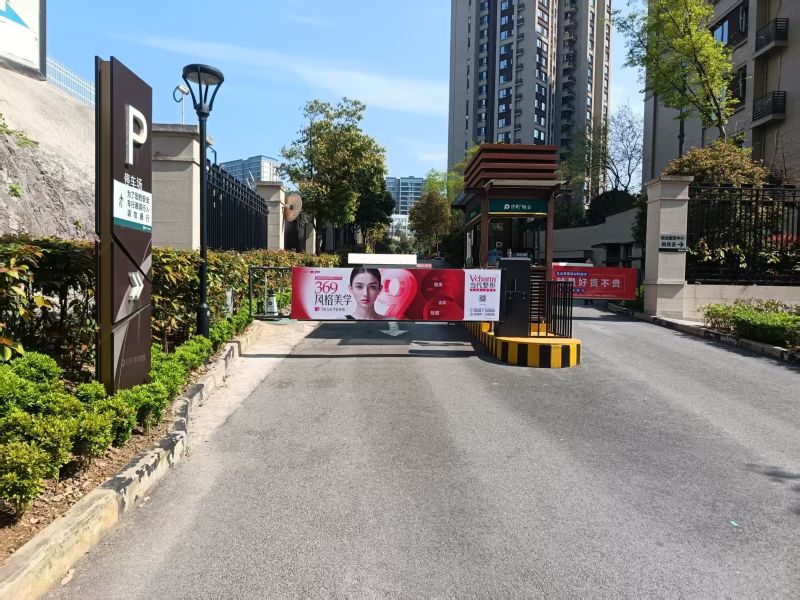
2. Barrier gate advertising
Installed on the lifting pole at the entrance and exit of the community, covering vehicles and pedestrians entering and exiting. The advantage of barrier gate advertising lies in its prominent location and strong visual impact, especially suitable for automotive, home, and local lifestyle brands. The price is usually calculated by pole, and the monthly fee ranges from a few hundred to two or three thousand yuan.
3. Express cabinet advertisement
Using express delivery cabinets such as Fengchao and Cainiao as carriers, advertising spaces include cabinet door stickers, screen carousel, pickup notification pages, etc. The unique value of express cabinet advertising lies in its "just in need reach" - users' attention is highly focused when picking up items, and it can guide QR code interaction. Suitable for e-commerce, fast-moving consumer goods, and fresh food brands.
4. Community access control/lightbox advertising
The pedestrian barrier or bulletin board located at the main entrance of the community covers pedestrians entering and exiting. Some high-end communities also have lightbox style bulletin boards with prominent nighttime effects.
5. Ground projection/interactive device
Emerging forms, utilizing projection technology to project advertisements onto the ground or wall, partially supporting somatosensory interaction. Commonly found in children's activity areas or central squares in mid to high end communities, it has strong fun and is prone to social communication.
6. Community App/Community Advertising
The extension of online forms, such as screen opening advertisements on property apps and targeted push notifications on WeChat groups for homeowners. This type of advertisement can achieve precise delivery and effect tracking, but its popularity is currently limited.
2、 The five major roles involved in community advertising formats
1. Media resource providers: entities that have the right to operate community advertising spaces, including national giants (such as Focus Media), regional professional companies (such as Tianci Media, a professional community advertising platform), and property management companies that operate their own media.
2. Advertising agency/placement platform: an intermediary that integrates multiple media resources and provides one-stop placement services for advertisers. Professional platforms can provide full process services such as point selection, price negotiation, creative production, and monitoring reports.
3. Property management company: The "landlord" of community advertising spaces earns revenue by renting out public spaces. Large property groups such as Vanke and Country Garden Services have started building their own advertising operation teams.
4. Advertiser: The brand owner or local merchant is the ultimate payer of advertising fees. From large fast-moving consumer goods to beauty salons and educational institutions around the community, they are all frequent visitors to community advertising.
5. Owners: The audience of advertisements is also the owner of community public spaces. The acceptance of advertisements by property owners and the management methods of property management companies directly affect the commercial value of advertising spaces.
3、 The business model of community advertising format
1. Media resource buyout model: Advertising companies sign long-term exclusive agreements with property management companies to buy out the operating rights of specific media forms within the community, and then sell them to advertisers. Focus Media and New Wave Media are typical representatives.
2. Sharing cooperation model: Advertising companies and property management companies share advertising revenue in a certain proportion. This method has lower risks for property management companies, but the profit sharing ratio is usually higher (30% -50%).
3. Self operated model: Large property groups establish their own advertising teams and directly connect with advertisers. The advantage is controllable resources and exclusive profits, but it requires professional sales and operational capabilities.
4. Platform matching mode: the Internet platform connects property companies and advertisers to achieve online site selection, order placement and broadcast monitoring. At present, it is still in the exploratory stage and the standardization level needs to be improved.
4、 Step by Step: How to integrate into community advertising formats and efficiently deliver
Step 1: Clarify the advertising target and audience
Is your product aimed at the whole family or specific groups of people? What's the budget? The clearer the goal, the more efficient the subsequent media selection and point selection.
Step 2: Select the matching media format
Pursuing high-frequency exposure and brand memory → Elevator framework
Pursuing interactive conversion, scanning codes to receive coupons → Elevator intelligent screen or express cabinet advertising
Covering households with cars, visual impact → barrier advertising
Limited budget, local merchants → community lightboxes or bulletin boards
Step 3: Select high-value communities
Don't just look at prices, evaluate the community's population matching (property fees, room prices, occupancy rates) and location quality (foot traffic, visibility). Calculate CPM (Cost Per Thousand People) to compare cost-effectiveness.
Step 4: Conduct advertising through professional agents
Community advertising resources are scattered, and the efficiency of connecting with property management one by one is extremely low. The professional agency platform integrates media resources from multiple communities, providing one-stop services from site selection, price comparison, production, publication, and monitoring.
Step 5: Effect tracking and iteration
Track conversion results through exclusive QR codes, discount codes, or in store statistics. Optimize point selection and creative design based on data to continuously improve ROI.
5、 Common Misconceptions Reminder
Misconception 1: Believing that community advertising is just elevator advertising. The community advertising industry is far beyond elevators, with high-value touchpoints such as express delivery cabinets, barrier gates, and access control. Combination advertising can achieve "surround style" exposure.
Misconception 2: Only focus on media fees and ignore production and installation costs. The production cost of frame posters is about 100-300 yuan per piece, and the production cost of smart screen videos may be thousands. Ask for the 'all inclusive price' before signing the contract.
Misconception 3: The advertising cycle is too short. I just got familiar with it after one month, and it only takes three months for it to start taking effect. Suggest investing for at least 3 months.
Misconception 4: Use one set of creativity to target all media. The 3-second principle inside the elevator requires large characters for the barrier gate and QR code guidance for the express delivery cabinet. Different media require different creativity.
6、 Future trends: digitalization, precision, and scenarization
1. Digitization: Traditional frame posters are being replaced by smart screens, with remote image changes and data monitoring becoming standard. In the future, elevator advertising will achieve programmatic purchasing and real-time optimization.
2. Precision: The "Thousand Buildings, Thousand Faces" advertising based on community portraits (housing prices, number of households, population structure) will become mainstream. Advertisers can accurately select target communities instead of casting a wide net.
3. Scene based: The advertising content will be deeply integrated with the community scene. For example, fresh food e-commerce promotes "buying groceries after picking up items" next to the delivery cabinet, while educational institutions promote "tutoring classes in the community" during school hours.
4. Online and offline linkage: Community advertising will no longer be an isolated offline exposure, but will be connected with online search, e-commerce, and social platforms to achieve a short link conversion of "see scan order".
VII. Conclusion
The community advertising industry is a vast and evolving ecosystem, covering various media forms such as elevators, turnstiles, express lockers, and access control, involving multiple roles such as media providers, property management, advertisers, and agency platforms.
For beginners, it is recommended to start with 1-2 media formats, choose 3-5 matching communities, advertise for 3 months, verify the effectiveness with data, and then gradually scale up. If you find the business format complex and resources scattered, finding a professional agency platform is the most efficient choice.
Tianci Media is a professional community advertising platform that integrates community media resources from major cities across the country. From demand analysis and location evaluation to creative execution and effect tracking, it provides one-stop full process services to help you easily integrate into the community advertising ecosystem. Consult now for your exclusive community advertising placement plan!