What are the new types of outdoor advertising media? What are their advantages?
2025-12-16Tianci MediaViews:157
Highlights
This article systematically reviews the mainstream new outdoor advertising media (digital screens, interactive installations, drones, etc.) in 2024, deeply analyzes their technical advantages, communication value, and applicable scenarios, and helps you accurately choose the media to achieve marketing breakthroughs. Read now to obtain cutting-edge outdoor marketing strategies.
When you walk through a business district and are drawn to a giant interactive screen; when you are in an elevator and see dynamic advertisements that change in real-time based on the weather; when you wait for the bus and complete a simple branded game on a smart bus stop sign... outdoor advertising is no longer simply a "flat poster" or "static light box". The integration of technology and data is giving birth to a profound revolution in offline media. For marketers, understanding what new types of outdoor advertising media are and what advantages they possess has become a prerequisite for formulating effective communication strategies. This guide will systematically outline the landscape of this transformation for you.
Chapter 1: Why Change? - Challenges and Renewal of Traditional Outdoor Advertising
The core value of traditional outdoor advertising (such as billboards, light boxes, and bus bodies) lies in its geographical location and compulsory exposure. However, its pain points are also evident: the effectiveness is difficult to quantify, content updates are slow, the format is monotonous, and there is a lack of interaction with the audience.
The new outdoor advertising media are precisely born to address these issues. With digitalization, intelligence, interactivity, and precision as their core characteristics, they not only inherit the spatial advantages of outdoor media but also integrate the precision and interactivity genes of the Internet.
Chapter 2: Core Overview - What Are the Mainstream New Outdoor Advertising Media?
We can categorize these emerging forces based on their level of "intelligence" and application scenarios.

1 . Digital upgrade category (from static to dynamic)
This is the most basic and prevalent "new type".
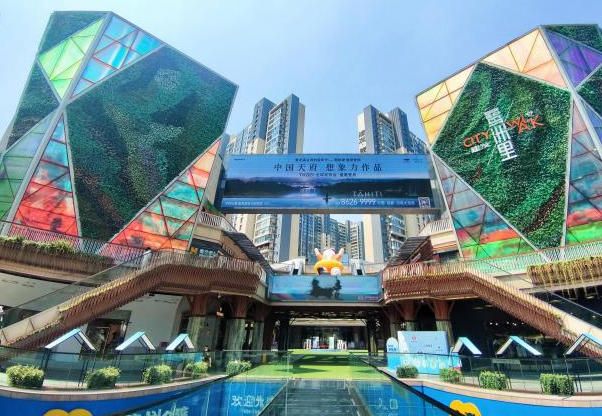
LED digital screen (landmark media)
Form: A giant LED display screen located in the city's core business district and transportation hub.
Case: "Internet celebrity" large screens in places such as Beijing Taikoo Li, Shanghai Bund, and Canton Tower.
Advantages: Unparalleled visual impact, capable of playing high-definition video advertisements, with content that can be remotely and instantly updated, suitable for brand event marketing and volume explosion.
Digital screen/electronic light box network
Form: LCD screen network distributed in office buildings, community elevators, shopping malls, cinemas, and other scenarios.
Representative media: Focus Media and New Trend Media's elevator smart screens.
Advantages: Networked location and programmed playback. It can achieve personalized advertising for thousands of buildings and time-segmented delivery, selecting different advertisements for different buildings and time slots through back-end data.
2. Intelligent interaction (from communication to dialogue)
This type of media transforms advertising from a "viewing" experience to an "experience" one.
Interactive installation advertisement
Form: An offline device integrating touch screen, sensors, AR (augmented reality), and body sensing technology.
Case: makeup mirror, motion sensing game screen, and AR scanning interactive photo booth.
Advantages: High engagement, high memorability, and spontaneous dissemination. It can deeply convey the product experience and guide users to share it on social networks, forming secondary dissemination.
Smart delivery locker/charging station advertising screen
Form: Screens on express delivery lockers or shared charging devices in communities or office buildings.
Advantages: Reaching deep into the "last 100 meters" of residents' lives, we can engage with users in high-frequency, rigid demand, and waiting scenarios such as package pickup or charging, where their attention is focused. Furthermore, we can utilize online data to inform offline deployment.
3. Technology integration category (reshaping space and vision)
This type of media redefines the presentation of outdoor advertising with cutting-edge technology.
Glasses-free 3D large screen
Configuration: Utilizing specialized video content and screen design, this ultra-large LED screen can produce a realistic 3D effect without the need for glasses.
Advantages: Creating phenomenal visual spectacles that are easily shared and "checked in" on social media, making it a top-tier medium for urban event marketing.
Building light and shadow show/projection advertising
Form: Utilizing the building's exterior wall as a screen, dynamic light and shadow art or advertising content is presented through a giant projection device.
Advantages: Deep integration of landmark architecture and brand content to create a stunning night event, featuring strong artistic quality and topicality.
Drone formation performance
Formation: Hundreds or even thousands of drones fly in formation in the night sky, forming dynamic brand logos or slogans.
Advantages: Exclusive and highly event-driven, capable of creating global news topics, suitable for large-scale brand celebrations or product launches.
4. Deepening of travel scenarios (from fixed to mobile)
Interactive screen in ride-hailing/taxi vehicles
Configuration: A smart screen installed on the back of the driver's seat or behind the passenger seat.
Advantages: The enclosed cabin environment allows for precise reach (passenger personas can be analyzed based on the starting and ending points of the journey), and it can be combined with LBS to push nearby merchant offers, realizing a closed loop of "watching-navigating-consuming".
Chapter 3: Analysis of Core Advantages - Why Are New Types of Outdoor Advertisements More Effective?
These media, with their diverse forms, collectively establish four core advantages that surpass tradition:
1. Advantage 1: Quantifiable and Optimizable
Through the digital backend, advertisers can obtain nearly real-world exposure, playback frequency, and even interaction data (such as scan rate and interaction duration) just like monitoring online ads. This provides a solid basis for effect evaluation and enables optimization of delivery strategies based on data.
2. Advantage 2: Dynamic and Real-time Content
Bid farewell to static images that remain unchanged for months. Advertising content can be updated in seconds, enabling:
Time-based delivery: Soybean milk is delivered during breakfast time, and fast food is delivered during lunch time.
Weather-triggered: Automatically play advertisements for umbrella or taxi-hailing apps on rainy days.
Real-time marketing: Combine social hotspots or event results to instantly change creative ideas.
3. Advantage 3: Strong interaction and deepened experience
By leveraging technologies such as QR code scanning, AR, and body sensing, one-way communication is transformed into two-way interaction. This not only enhances the audience's sense of participation but also directly collects sales leads, guides downloads, and promotes offline visits to stores, thereby achieving a closer integration of product and effect.
4. Advantage 4: Closed-loop online and offline traffic
QR codes, NFC, and mini-programs have become standard configurations. Outdoor advertising has become an entrance to offline traffic, guiding users to the brand's online private domains (official account, mini-programs, and online stores), completing the closed loop of traffic attraction, interaction, and conversion, and achieving the integration of marketing channels.
Chapter 4: Common Misconceptions and Traps to Avoid
Misconception 1: Cool technology > Strategy and creativity
Reminder: Technology is a means, not an end. All interactive designs must serve the brand's core message and marketing objectives. Avoid ineffective gimmicks that "interact for the sake of interacting".
Misconception 2: Ignoring the matching between scenarios and audiences
Reminder: Advertising games in office buildings or promoting high-end financial products in old communities are both mismatches. It is essential to analyze the demographic characteristics, mindset, and behavior patterns of the people in the media's target environment.
Misconception 3: Using traditional advertising evaluation standards to measure
Reminder: The value of new media lies not only in "exposure", but also in "interaction" and "conversion". A multi-dimensional evaluation system encompassing exposure, interaction, offline diversion, and online fan increase should be established.
Chapter 5: Conclusion
The rise of new outdoor advertising media marks the comprehensive arrival of the "smart outdoor" era. It is no longer a supplement to online traffic, but a key battleground for building brand experience across all scenarios, connecting online and offline, and achieving data-driven growth.