In-Flight Advertising 2026: Programmatic, Digital Cabin & The Altitude Advantage
2026-08-01Tianci MediaViews:1
Highlights
In-flight advertising is undergoing its most significant transformation in decades. What was once a static medium — tray table decals, magazine placements, and printed headrest covers — is rapidly evolving into a dynamic, data-driven, programmatic channel. The connected aircraft cabin is becoming a flying digital platform, and advertisers are taking notice. The numbers tell a compelling story. The global in-flight advertising services market is valued at US$544.2 million in 2026**, projected to grow at a CAGR of 11.9% to reach **US$1.33 billion by 2034. The broader inflight retail and advertising market is projected to increase from USD 3.67 billion in 2025 to USD 3.94 billion in 2026, with further expansion expected at a CAGR of 7.98%, reaching USD 6.29 billion by 2032. At the forefront of delivering these next-generation aviation advertising solutions is Tianci Media (天赐传媒), a global all-media intelligent advertising service provider with decades of industry experience. Core-operating domestic and international airport media, aircraft media, and commercial outdoor large-screen media, Tianci Media helps brands navigate the rapidly evolving in-flight advertising landscape.
The Science of the Altitude Advantage
Recent groundbreaking research has quantified what many marketers have long suspected: in-flight advertising works better. A first-of-its-kind study commissioned by Viasat, using biometric sensors to track heart rate and breathing patterns, revealed that in-flight advertising delivers 30% higher brand recall than ground-based ads. Passengers viewing ads in flight showed 8% higher emotional engagement compared to viewing the same creative on the ground.
The effect is most pronounced in the critical first moments. During the first 10 seconds of a 30-second creative, passengers were 12% more emotionally engaged in flight versus on the ground. This initial spike sustains throughout the full ad, creating a measurable advantage for brands. The research also revealed an unexpected demographic pattern: older passengers, who show lower baseline engagement on the ground, experienced a much more significant jump in emotional engagement during flights — attributed to the pressurized cabin environment.
What makes the in-flight environment so uniquely effective? Context and timing. A passenger heading to a beach vacation with children represents a different mindset — and different product needs — than someone traveling for a ski trip or honeymoon. In-flight advertising enables brands to reach consumers during distinctive life moments that are difficult to target through traditional platforms. Advertisers targeting specific destinations through in-flight campaigns are seeing lift across their other marketing channels in those locations.
Programmatic Advertising Takes to the Skies
2026 marks a pivotal year for in-flight advertising with the arrival of programmatic advertising in connected aircraft cabins. In June 2026, Magnite and Viasat Aviation partnered to introduce programmatic advertising across connected aircraft cabins, enabling advertisers to access in-flight entertainment screens and passenger devices through automated ad buying platforms.
The platform supports advertising on seatback screens as well as passenger-owned devices connected through onboard Wi-Fi. Advertisers can target campaigns based on factors such as route, destination, and travel-related events, with standardized measurement and reporting capabilities. Viasat's connectivity and digital entertainment services are deployed across more than 60 airlines and over 4,000 aircraft globally — providing advertisers with scaled access to a highly engaged audience.
This development reflects a broader trend: airlines are increasingly exploring ancillary revenue streams beyond ticket sales, and in-flight media is emerging as a new monetization channel. Programmatic advertising is expected to play a growing role in helping carriers monetize onboard digital platforms while offering advertisers access to a captive, highly engaged audience.
The Digital Cabin Revolution
The aircraft cabin itself is being reimagined. At Aircraft Interiors Expo (AIX) 2026, Burrana unveiled RISE Engage — a solution that turns seatbacks into dynamic digital surfaces using e-paper display technology originally developed for high-performance environments like motorsports.
For decades, in-flight advertising relied on static formats such as decals and printed materials — offering limited flexibility, often remaining unchanged for months. RISE Engage replaces static ads with a dynamic, updateable format, allowing airlines to deliver more targeted and relevant content throughout the journey. Each seatback becomes a flexible digital interface that can be updated instantly, with content tailored based on route, destination, or passenger profile.
The digital aircraft cabin is becoming a "flying software platform". In-flight entertainment — both seatback and personal device — is the gateway to a new kind of passenger engagement. This convergence of connectivity, digital content, and ancillary revenue strategies is transforming the cabin into a dynamic, personalized advertising environment.
Tianci Media: Your Partner in In-Flight Advertising
Tianci Media offers a comprehensive suite of in-flight advertising solutions designed to leverage the latest technologies and trends:
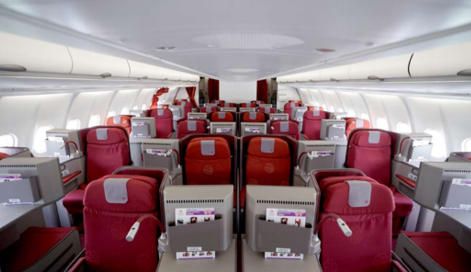
Conventional Platform Advertising: Traditional formats including in-flight magazines, tray tables, headrests, overhead bins, boarding passes, and bag tags — each proven to deliver high recall among captive passengers.
Dynamic Digital Cabin Advertising: As airlines increasingly adopt digital seatback displays and connected cabin technologies, Tianci Media helps brands access these emerging formats for targeted, real-time campaign delivery.
Programmatic In-Flight Advertising: Through partnerships and integrations with connected aircraft platforms, Tianci Media enables brands to leverage data-driven, automated ad buying for in-flight entertainment screens and passenger devices.
Integrated Airport-to-Aircraft Campaigns: Tianci Media's media coverage spans over 100 domestic cities and international markets, offering seamless campaigns that engage travelers from airport arrival through in-flight experience.
Why In-Flight Advertising Delivers Results
Superior Attention: With 30% higher brand recall and 8% higher emotional engagement than ground-based ads, in-flight advertising delivers measurable advantages.
Captive Audience: The aircraft cabin offers long dwell times, minimal distractions, and zero competing media — your brand enjoys 100% share of voice.
Premium Demographics: In-flight advertising reaches business travelers, executives, and high-net-worth individuals with strong purchasing power.
Contextual Relevance: Destination-based targeting enables brands to reach consumers during distinctive life moments — vacations, business trips, family reunions — that are difficult to target through any other channel.
Conclusion
In-flight advertising in 2026 is no longer a static, one-size-fits-all medium. It is a dynamic, data-driven, programmatic channel that reaches consumers at moments of heightened emotional engagement. With 30% higher brand recall than ground-based media, access to premium demographics, and the ability to target based on destination and travel context, in-flight advertising delivers ROI that few other formats can match.
Tianci Media, with decades of industry expertise, comprehensive aviation media resources, and a commitment to innovation, offers brands a one-stop solution for in-flight advertising success. From conventional cabin placements to dynamic digital displays and programmatic integrations, Tianci Media delivers the reach, sophistication, and measurable results that modern brand campaigns demand.