
- Photos
- Specs
- Advantages
- Value
- Media Map
| Area:Zhengzhou | Type:high-speed railway | Frequency:0 |
| Address:No. 199 Xinyi Road, Jinshui District | Format:Light box | Duration:0 |
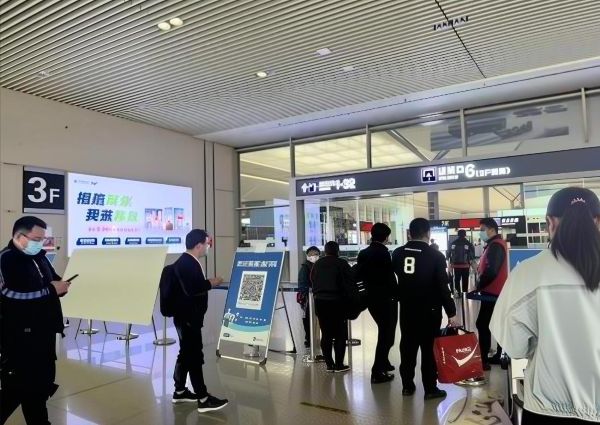
| Location:Enter through Gate 3F | Min Qty:1 | Operating Time:0-24o'clock |
| Size:7.93m*3.25m | Min Period:month |
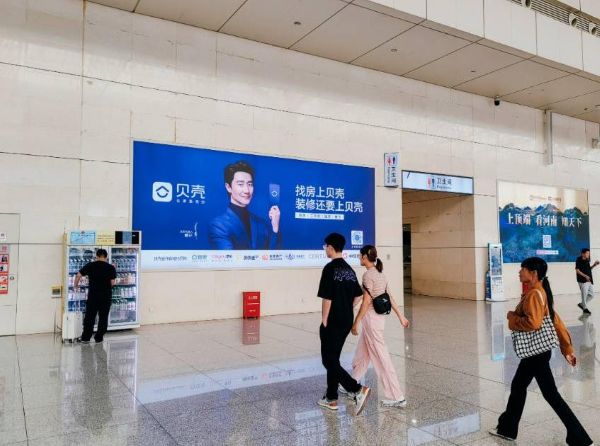
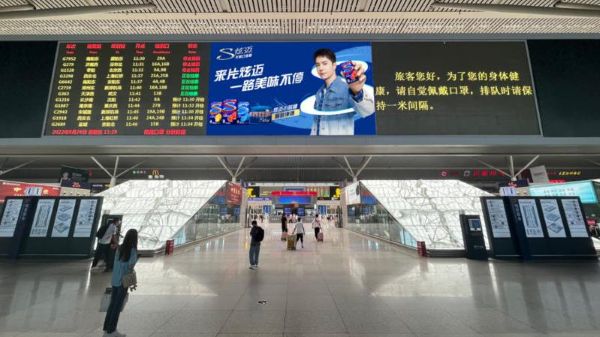
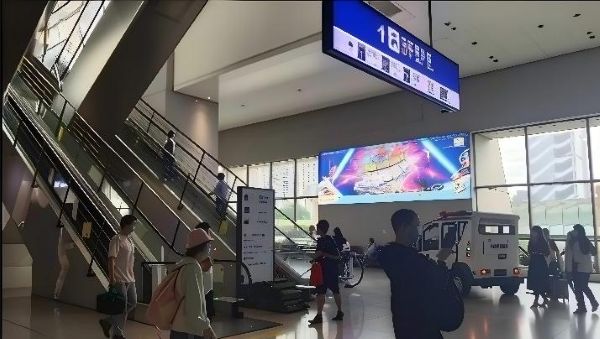
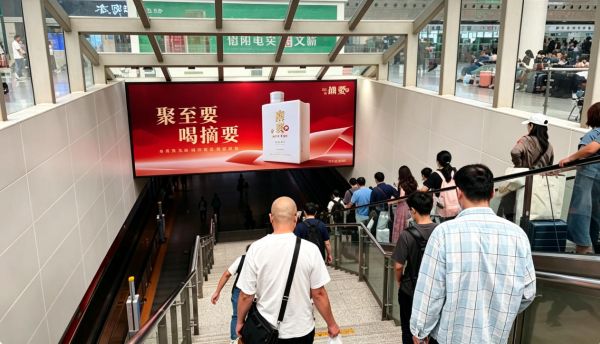
Located above the escalator lintel at the ticket‑checking gate in the third‑floor waiting hall of Zhengzhou East Railway Station, this spot serves as a critical thoroughfare for passengers heading to the platforms for boarding. The media is mounted on the top beam of the escalator entrance and exit, reaching all departing passengers who pass through the ticket gates and take escalators down to the platforms. It constitutes an indispensable communication node connecting the waiting hall to the platforms. Leveraging the massive passenger flow of Zhengzhou East Railway Station, a hub for the米‑shaped high‑speed rail network, it captures boarding passengers for every train.
The light boxes are installed directly above the upward‑ and downward‑moving escalators. Their picture height aligns with the eye level of standing passengers. No upward or downward head movement is required while riding the escalators. The horizontally extended visuals deliver an immersive viewing experience. Passengers spend a steady 20‑30 seconds on the escalator, a downtime segment of their journey free from other distractions. The advertisement read rate is over 40 % higher than that of regular on‑site locations.
As a core high‑speed‑rail hub in central China, Zhengzhou East Railway Station draws high‑value passenger groups including business and official travelers, people on work trips, and tourists. Consumers aged 18‑50 make up a large proportion with strong purchasing power. After ticket checking, passengers take escalators down to the platforms. Their line of sight naturally drifts upward during movement, putting the light boxes within their primary field of vision and granting the advertisements inherent forced‑viewing attributes. During peak periods such as Spring Festival travel rush, summer travel rush and public holidays, high‑density concentrated exposure can be achieved within short time frames.
When passengers take the escalator downward, they can view the full‑frame information without tilting their heads upward. Located at the escalator top, the advertisement effectively avoids interference from other surrounding ads. Aligned with the escalator’s travel direction, it becomes the absolute focal point in passengers’ field of vision. This time window falls exactly within the "attention gap" during passengers’ travel transition phase, when passengers maintain relatively focused attention, leading to a notable improvement in the efficiency of advertisement message reception.
All ticket‑holding passengers preparing for their trips will pass through this escalator route. Passengers can fully perceive the light‑box visuals throughout their upward escalator ride. Supported by the daily outbound passenger flow of 125,000 at Zhengzhou East Railway Station, high‑frequency, large‑scale and sustained exposure can be achieved. Light boxes are arranged along the entire escalator path, accompanying passengers for the full escalator journey to deliver panoramic visual coverage with natural and efficient exposure.
This advertising spot sits at the end of the critical travel chain of "ticket checking‑platform access‑boarding". As passengers are about to start their journeys, brand messages are easily imprinted in their deep memory. It suits diverse marketing scenarios including brand image building, new‑product launches and regional cultural‑tourism promotion. Light‑box visuals can be replaced conveniently, flexibly catering to both short‑term campaign placements and medium‑to‑long‑term brand exposure requirements. Every impression targets genuine travelling passengers, ensuring better conversion efficiency for advertisement placements.