A complete guide to the process of elevator advertising release: from scratch to publication
2026-02-27Tianci MediaViews:146
Highlights
Is the process of elevator advertising complex? This article breaks down the entire process from goal setting, point selection, creative production to publication execution, providing a five step practical guide and revealing common misconceptions. Tianci Media, a professional elevator advertising platform, provides you with one-stop publishing services, making advertising more worry free and efficient!
When you walk into the elevator in the residential area and see those exquisite framed advertisements or scrolling smart screens, have you ever thought about how these advertisements are "displayed on the wall"? What steps are required? If I want to place an elevator advertisement, where should I start?
For advertisers who are new to elevator advertising, understanding the elevator advertising release process is the first step towards successful advertising placement. From goal setting to point selection, from creative production to publication execution, every step affects the final effect. If the process is unclear, it may not only waste budget, but also delay marketing opportunities.
This article will systematically break down the entire process of elevator advertising placement and provide an actionable and practical guide to help you easily complete elevator advertising placement from scratch.
1、 Three core preparations before elevator advertising release
There are three essential preparations before officially launching the release process. They determine the direction and efficiency of all subsequent steps.
1. Clearly define the advertising target
What effect do you hope to achieve through elevator advertising? Is it to enhance brand awareness or to attract traffic to offline stores? Is it a warm-up for the launch of new products or a long-term image maintenance? The goal determines the media format, location selection, and creative direction.
2. Define the target audience
Who are your target customers? What type of community do they live in? In which region are you active? What are the age, income, and family structure? A clear portrait of the crowd can help you accurately choose your advertising location.
3. Determine the budget scope
The cost of elevator advertising varies greatly depending on the city, community level, media format, and placement period. Defining a budget in advance can help make reasonable choices in subsequent steps and avoid overspending.
2、 Five steps to complete the entire process of elevator advertising release
Step 1: Media format and location selection
This is the core factor that determines the effectiveness of advertising. Elevator advertising is mainly divided into two forms:
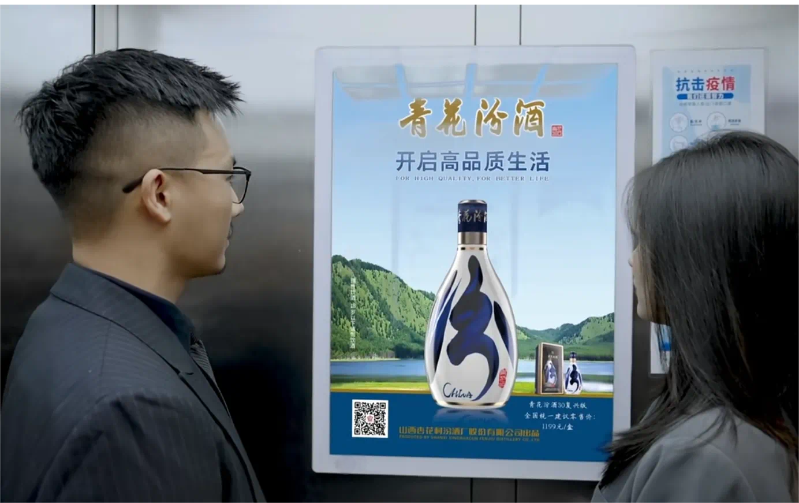
Elevator frame advertisement (static poster): Installed inside the elevator car, with a stable image and visible 24 hours a day. Suitable for brand image display and long-term information transmission, with relatively affordable costs.
Elevator intelligent screen advertisement (dynamic video): installed above the elevator door or inside the car, combining sound and image, with a large information carrying capacity. Suitable for scenarios that require quick attention, such as new product launches and promotional activities.
The key to point selection: not all elevators have the same value. Factors such as community level, occupancy rate, elevator location (main or fire elevator), and audience matching need to be considered. Suggest adopting a "bullseye strategy": with brand goals as the core, select buildings from near to far.
Step 2: Creative Design and Production
The creativity of elevator advertising has its unique rules. Passengers stay in the elevator for a short time (usually 30-60 seconds), the environment is closed, and their attention is easily focused but also easily distracted.
The Three Principles of Creativity:
The brand logo should be large: making people know who you are at a glance.
The core message should be short: clearly state the benefits you can bring in one sentence.
The action instructions must be clear: the QR code, phone number, and address must be prominent and easy to remember.
Production requirements: High precision printing files are required for elevator frame advertisements, and video files that comply with technical specifications are required for smart screen advertisements. The production cycle usually takes 3-7 days.
Step 3: Inquiry and Comparison of Proposals
Inquire with 2-3 qualified elevator advertising companies to provide your advertising needs (region, community type, format, duration) and obtain detailed pricing plans.
When inquiring, it is necessary to clarify:
Does the price include the cost of image production and installation?
How long is the advertising cycle? Can it be flexibly adjusted on a weekly/monthly basis?
Do you provide publishing and broadcasting monitoring services?
Who is responsible for maintaining the visuals during the contract period?
Professional advice: Don't just compare prices, but also compare service quality and location resources. Tianci Media is a professional elevator advertising platform with a community building database covering major cities across the country. It provides one-stop services from strategy consulting to publication execution, helping you efficiently screen the best locations.
Step 4: Sign the contract and make payment
After confirming the plan, sign a formal contract with the media. The contract content should include:
Details of advertising locations (community name, elevator number, media format)
Starting and ending time of placement
Cost breakdown (media publishing fee, production fee, installation fee, taxes and fees)
Payment method and time
Rights and obligations of both parties
Liability for breach of contract and dispute resolution methods
After paying the first installment, we enter the creative production and publication preparation stage.
Step 5: Publication Execution and Effect Tracking
Publication monitoring: After the agreed publication time in the contract arrives, the media is required to provide publication photos or videos with time and location watermarks to ensure that the advertisement is displayed as agreed. If conditions permit, you can conduct random sampling by yourself.
Effect tracking:
Direct feedback: Set up exclusive QR codes, discount codes, or phone extension numbers to track the number of inquiries and conversions from this channel.
Brand research: Conduct small-scale questionnaire interviews in the advertising community to understand advertising awareness.
Sales data: Compare the sales changes of surrounding stores during the advertising period and evaluate the actual driving force of advertising on business.
Continuous optimization: Based on the effectiveness data, accumulate experience for the next advertising campaign, adjust the positioning, creativity, or cycle.
3、 Common Misconceptions and Avoiding Pits Guide
Misconception 1: Skip requirement analysis and directly inquire about prices
Many beginners ask 'How much does elevator advertising cost per yuan' as soon as they come up, but they can't tell who their target audience is. This will result in the media being unable to recommend suitable locations, ultimately leading to a pile of invalid quotes.
The correct approach: First, take the time to clarify your target audience and advertising objectives, and then inquire with clear needs.
Misconception 2: Only comparing prices, ignoring the quality of points
The lowest priced locations are often located in communities with low occupancy rates and populations that do not match the target, which may seem cost-effective but is actually a waste. The quality of the audience is far more important than the unit price.
Misconception 3: Creative "one size fits all" approach, where one set of materials is invested in all
The characteristics of different communities' populations are different, and creativity should also be differentiated. High end communities require style, while ordinary communities require affinity. If conditions permit, creative ideas can be customized for key communities.
Misconception 4: Underestimating production cycle and cost
From creative design to document delivery, and then to production and installation, it usually takes about a week. If you want to rush into marketing, it is important to plan ahead and reserve sufficient time.
Misconception 5: After signing the contract, 'letting go' and ignoring monitoring and broadcasting
If not monitored in a timely manner after publication, there may be situations such as missed or incorrect submissions, and damaged images, which can affect the effectiveness of advertising. It is necessary to request a monitoring report or conduct self inspection.
Misconception 6: Collaborating with unqualified intermediaries
Elevator advertising resources are scattered, and there are a large number of personal intermediaries in the market. Cooperating with unqualified intermediaries may face risks such as false location, opaque prices, and lack of guarantee for publication. It is recommended to choose a legitimate advertising company, such as Tianci Media, to ensure that the advertising is legal and compliant.
4、 How can digital tools optimize the publishing process?
With the development of technology, the process of elevator advertising release is also undergoing digital upgrading.
Intelligent point selection system: The professional platform has a building database that can intelligently recommend the best point combination based on crowd portraits and budget ranges, greatly improving point selection efficiency.
Remote publication monitoring: Some smart screens support remote publication and real-time monitoring. Advertisers can view playback records and screenshots online without the need for on-site verification.
Data based effect analysis: Smart screen advertising can track exposure times and interactive data, helping advertisers quantify evaluation effects and optimize subsequent advertising.
These digital tools are making the elevator advertising process more transparent and efficient.
5、 Conclusion
The process of elevator advertising release may seem simple, but it actually involves multiple steps such as target positioning, point selection, creative production, contract signing, and publication execution. Every step requires professional knowledge and meticulous operation.
For beginners, mastering this process can avoid pitfalls and make advertising more efficient. But more importantly, find a trustworthy professional partner to provide professional support at every step of the process.
Tianci Media is a professional elevator advertising platform that has been deeply involved in elevator media for many years. It has a vast collection of building resources and rich advertising experience covering the whole country. We provide one-stop full process services from demand analysis, point recommendation, price negotiation to creative design, publication execution, and effect tracking. Make every elevator advertisement you place a starting point for efficient dialogue between your brand and target users.