Comprehensive Guide to Media Advertising Placement
2026-02-25Tianci MediaViews:106
Highlights
A media advertising guide that beginners must read! This article provides a detailed explanation of mainstream forms such as television, outdoor activities, and social media, offering the entire process steps from budget formulation to effectiveness evaluation, and revealing 5 common misconceptions. Read now, master scientific advertising methods, and spend every penny of advertising money wisely!
When you turn on the TV, swipe your phone, take the subway, wait for the elevator... advertisements are everywhere. They come into your sight in various forms, attempting to influence your consumption decisions. For brands, media advertising is the core means of communicating with consumers.
But when faced with a dazzling array of media types - television, outdoor, social media, search engines - beginners often feel at a loss: which one should they choose? How to invest effectively? How is the budget divided? How to measure the effect?
This article will systematically break down all aspects of media advertising for you, from basic concepts to practical strategies, helping you establish a complete knowledge framework.
1、 What is media advertising? Why is it still important?
Media advertising, in simple terms, refers to the paid dissemination of brand information to target audiences through various media platforms. It can be a 30 second TVC on TV, a stream of information on social media, or a poster in a community elevator.
In today's digital wave sweeping everything, some people may ask: Is traditional advertising still useful? The answer is affirmative. The reason why media advertising has been thriving is due to its irreplaceable core values:
Establish brand awareness. New brands need to be seen, old brands need to be remembered. Advertisements implant brand impressions in consumers' minds through high-frequency exposure.
Shaping brand image. Good advertising can convey brand values, establish emotional connections, and generate trust and goodwill among consumers.
Drive consumer decisions. Whether it's stimulating immediate purchases or laying the groundwork for subsequent conversions, advertising is an indispensable part of the marketing funnel.
Forming competitive barriers. When your advertisement occupies the minds of consumers and competitors want to squeeze in, they need to pay higher costs.
2、 The Four Mainstream Types of Media Advertising
According to different forms of media and communication methods, media advertising can be divided into the following four categories.
1. Traditional media advertising
Including television, radio, newspapers, magazines, etc. The characteristics of this type of media are wide coverage, strong credibility, and suitability for establishing widespread popularity and brand endorsement. Television advertising is suitable for mass consumer goods, radio is suitable for car users, and newspapers and magazines are suitable for specific readership groups.
2. Outdoor media advertising
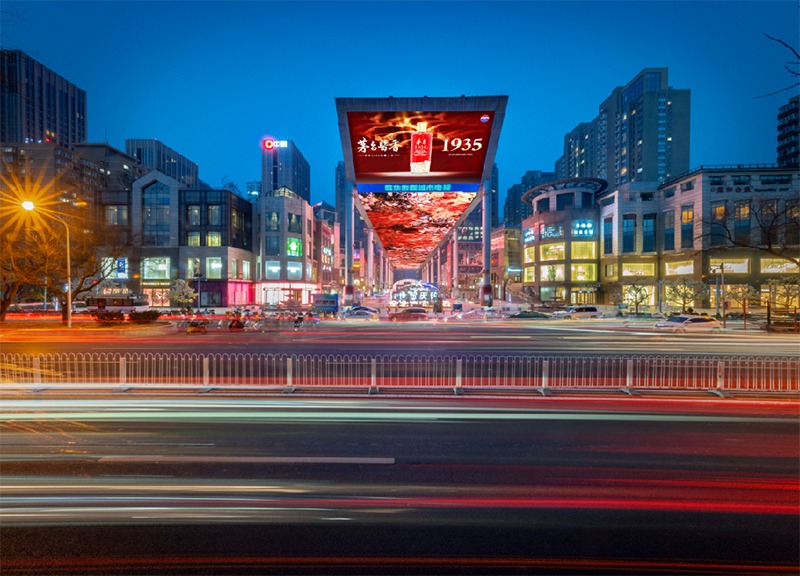
Including bus bodies, subway lightboxes, elevator frames, commercial district screens, community barriers, etc. The characteristics of this type of media are strong scene based, forced exposure, and high-frequency reach. Bus advertisements running through the main roads of the city, and elevator advertisements repeatedly viewed in enclosed spaces, are all powerful tools for establishing local awareness.
3. Digital media advertising
Including social media advertising (WeChat, Weibo, Tiktok), search engine advertising (Baidu, Google), video website advertising (Youku, Tencent Video), information flow advertising, etc. The characteristics of this type of media are precise targeting, strong interactivity, and traceable effects, making it suitable for full chain marketing from exposure to conversion.
4. New media advertising
Including OTT Internet TV advertising, program purchase, KOL/online celebrity marketing, live broadcast with goods, etc. This type of media combines technology and content, with novel forms and strong interactivity, and is particularly popular among young consumers.
3、 How to choose the appropriate media advertisement for oneself? Five step decision-making method
How to make a scientific choice when facing numerous types of media? The following is a five step decision-making framework.
Step 1: Clarify marketing objectives and audience profile
What is your goal? Is it to enhance brand awareness or drive short-term sales? Who are your target customers? How old are they? Where do you live? What are your hobbies and interests? The goal determines the direction of media selection, while the audience portrait determines the degree of media matching.
Step 2: Understand the characteristics and costs of various media
The characteristics and costs of different media vary greatly. Television has a wide coverage but high cost, outdoor media has strong local characteristics and high cost-effectiveness, and digital media is precise but requires continuous investment. You need to have a basic understanding of the advantages and disadvantages of mainstream media and the approximate price range.
Step 3: Match media and audience
Choose the channel that best reaches the audience based on their media exposure habits. If your target customers are young white-collar workers, elevator advertising and social media may be more effective; If you are a business person, airport advertising and financial media are more suitable; If you are a housewife, television and community advertising are preferred.
Step 4: Develop a budget and combination strategy
No media can dominate the world. The scientific approach is to combine advertising: using television or outdoor to increase exposure, using digital media for precise reach and conversion, and using social media for interaction and word-of-mouth. Determine the core media and auxiliary media based on the budget size.
Step 5: Small scale testing and optimization
Before the official large-scale launch, conduct small-scale testing first. Select 1-2 media outlets and 1-2 regions, advertise for 1-2 cycles, and track performance data. Optimize creativity, adjust positioning, reallocate budget based on test results, and gradually scale up.
4、 The complete process of media advertising placement
No matter which media is chosen, the complete advertising process usually includes the following five steps.
1. Develop strategies and plans
Based on marketing objectives and audience analysis, determine media mix, advertising area, advertising cycle, and budget allocation. Formulate a written media placement plan.
2. Creative content production
Produce advertising materials based on media characteristics. Television requires high-quality videos, outdoor requires minimalist visuals, and social media requires interactive content. Creativity must be adapted to the media in order to achieve maximum effectiveness.
3. Media procurement and negotiation
Contact media or agency companies to obtain quotes, negotiate prices, and sign contracts. For large-scale advertising, it is recommended to strive for better conditions through price comparison and negotiation.
4. Execution and publication monitoring
Execute the delivery according to the agreed time, location, and frequency in the contract. Request the media to provide photos or videos of the publication, and if possible, personally verify on-site to ensure that the advertisement is displayed as agreed.
5. Effect tracking and evaluation
Track conversions through exclusive QR codes, discount codes, phone extension numbers, and other methods. Collect exposure data, interaction data, sales data, calculate input-output ratio, summarize lessons learned, and provide reference for the next advertising campaign.
5、 Common Misconceptions and Avoiding Pits Guide
Misconception 1: Blindly pursuing big media and neglecting precise outreach
I want to be on CCTV! "" I want to target audiences! "- While big media is good, if your target audience is not there, even the biggest exposure is a waste. Choosing media is not about choosing the most expensive, but about choosing the most suitable.
Misconception 2: Creative content is' one size fits all 'and does not differentiate media characteristics
The most common mistake is to throw a TV advertisement intact onto an elevator screen and stuff a long text into a bus body. Creativity must be customized based on the characteristics of the media, with minimalism in outdoor settings, fun on social media, and emotional content on television.
Misconception 3: Short term advertising, expecting immediate results
The effectiveness of advertising requires time to accumulate. It is unrealistic to expect a surge in sales after just one week of investment. Especially for brand building media, it is recommended to accumulate brand awareness at least on a quarterly basis.
Misconception 4: Focus only on exposure and ignore conversion paths
Advertisements make people remember the brand, then what? If there is no clear conversion path - scan code, search, go to store - the advertising effect will be greatly reduced. Design a reception plan before launching.
Misconception 5: Lack of data thinking and inability to measure effectiveness
I know half of the advertising costs are wasted, but I don't know which half. "This famous saying still applies today, but with data tools, we can greatly reduce waste. By setting up a tracking mechanism, every investment is traceable.
6、 Conclusion: Future Trends in Media Advertising and Your Suggestions for Action
Media advertising has not disappeared, it is just constantly evolving. The integration of traditional media and digital media, digitalization of outdoor media, and videoization of social media, all media are developing towards more precise, interactive, and measurable directions.
For beginners, the following three suggestions are worth keeping in mind:
Starting from learning. Spend time understanding the characteristics, prices, and audience of mainstream media, and establish your own media knowledge base.
Start small. Don't pursue large-scale advertising from the beginning, start with small-scale testing and validate hypotheses with data.
Accompanying professionals. Media advertising involves a wide range of aspects, and self exploration is not only inefficient, but also prone to pitfalls. Choosing a reliable agency can achieve twice the result with half the effort.
No matter how times change, the essence of advertising remains unchanged: delivering the right information to the right people at the right time and place. Once you master this, you will have mastered the core of media advertising.